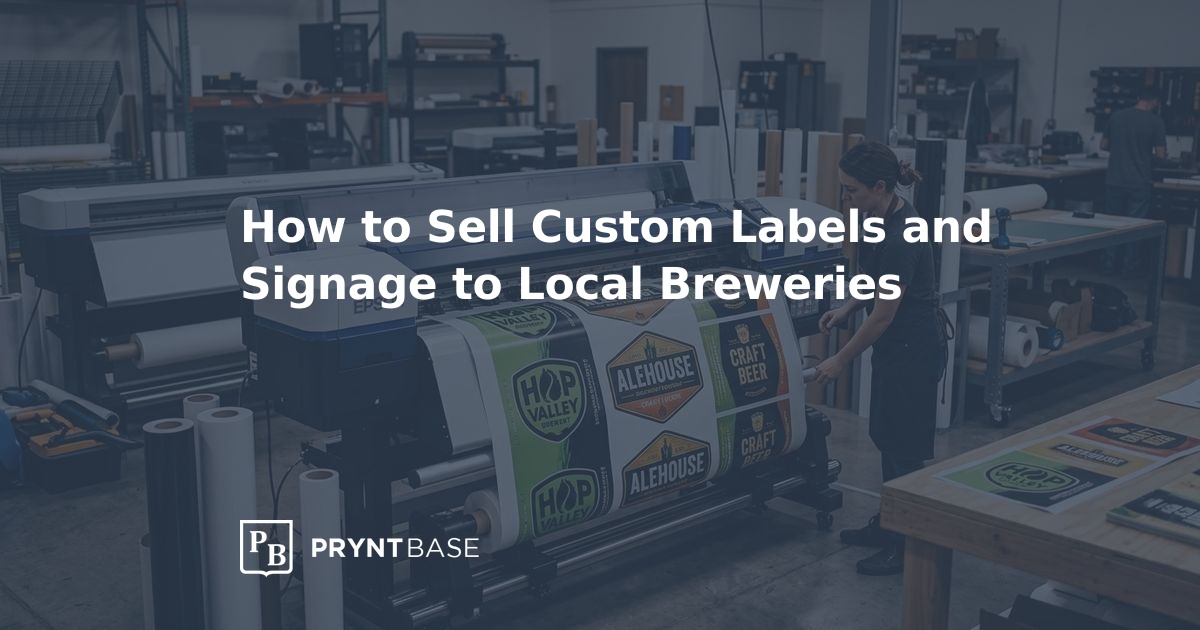
How to Sell Custom Labels and Signage to Local Breweries
The craft brewery market has matured from a niche hobby into a highly competitive retail environment. For a print shop, this shift represents a significant opportunity to move away from low-margin commodity work and toward specialized, high-value packaging and environmental graphics. Local breweries are unique because they require a diverse mix of print products, ranging from primary packaging labels that must survive cold, wet environments to wide-format event signage and point-of-sale displays. Success in this vertical requires more than just a competitive price per thousand. It requires a deep understanding of substrates, finishing techniques, and the logistical pressures faced by a head brewer or a taproom manager. This guide outlines the technical requirements and sales strategies necessary to position your shop as the preferred partner for the craft beverage industry. By focusing on the specific pain points of production and branding, you can secure long-term, recurring revenue from these local accounts.
The Technical Specs of Craft Beer Labels
When you walk into a cold storage room at a brewery, you see the ultimate stress test for any adhesive or substrate. The humidity is high, the temperature is low, and the containers are often subjected to friction during transit. If you approach a brewery with a standard paper label, you are setting them up for failure. To win this business, you need to speak the language of durability. Most craft breweries have moved to pressure-sensitive labels for their canning lines, which requires a specific set of material standards. Focus your pitch on these technical necessities:
- BOPP (Biaxially Oriented Polypropylene): This is the industry standard. It is moisture-resistant and does not tear. White BOPP is common, but clear BOPP allows for the look of a direct-to-can print without the high minimums of printed cans.
- Cold-Temp Adhesives: Standard adhesives fail when applied to cold, damp cans. You must specify an adhesive designed for refrigerated environments to prevent flagging or peeling.
- Over-laminates and Varnishes: A matte lamination provides a premium feel and protects the ink from scuffing during the packaging process. Alternatively, a spot UV varnish can highlight brand elements like logos or beer names.
- Liners: For high-speed canning lines, a PET (polyester) liner is often preferred over paper because it is less likely to snap under the tension of the labeling machine.
Providing a sample pack that includes labels applied to cans and submerged in an ice bucket for 24 hours is the most effective way to prove your shop understands their environment.
High-Margin Signage and Taproom Graphics
While labels provide the volume, signage and environmental graphics provide the margin. A brewery is not just a manufacturing facility. It is a retail space, a community hub, and a mobile brand. Each of these functions requires different wide-format solutions. You should audit their taproom and identify where their current branding is lacking. Most breweries are so focused on the beer that they overlook the customer experience within their own four walls.
- Point-of-Sale (POS) Displays: Custom-cut foam core or PVC headers for retail shelves help their 4-packs stand out in a crowded liquor store. Use your flatbed cutter to create unique shapes that mimic their logo.
- Tap Handles and Inserts: Many taprooms use interchangeable acrylic or wooden inserts for their tap handles. This is a perfect application for small-batch UV flatbed printing.
- A-Frame Signs and Banners: Breweries are event-heavy businesses. They need durable outdoor A-frames for sidewalk traffic and heavy-duty vinyl banners for festivals.
- Window Graphics: Use perforated window film to provide privacy for the production area while still utilizing the glass for high-impact branding.
If you are managing these assets through a system like StockMagic, you can keep track of their common substrates and ensure you always have the right rigid board or vinyl in house for their quick-turn event requests.
Navigating the Brewery Sales Cycle
Selling to a brewery is different than selling to a corporate marketing department. In many craft operations, the person making the decision is either the founder or the head brewer. These individuals are protective of their brand and highly sensitive to production delays. A late label delivery can stop a canning line, which costs the brewery thousands of dollars in lost time and product quality. To build trust, you need to show that your MIS and production workflow are built for reliability.
Start by identifying local prospects. Tools like LeadsMagic can help you find new beverage companies in your area before they even open their doors. When you make contact, do not ask for their business immediately. Instead, offer a technical audit of their current packaging. Many breweries struggle with labels that peel or inks that fade in sunlight. If you can solve a technical problem, the price becomes secondary. You can also use EmailMagic to send automated, value-added content about label design tips or TTB (Alcohol and Tobacco Tax and Trade Bureau) compliance layout requirements. This positions you as a consultant rather than a vendor.
Streamlining Production for Short-Run Consistency
The trend in craft beer is moving toward smaller batches and more frequent releases. This means your shop must be efficient at handling short-run digital work. If your estimator is spending thirty minutes quoting a run of 500 labels, you are losing money. You need a streamlined process from the initial quote to the final kiss-cut. Digital printing is the only way to handle the variety of SKUs a modern brewery produces without the massive overhead of plates and wash-ups associated with flexography.
Efficiency in the front office is just as important as press speed when dealing with breweries that launch two or three new beers every month.
Ensure your prepress department has clear die-line templates available for the brewery's graphic designer. Providing these templates upfront reduces the back-and-forth communication and prevents errors in the bleed or safety zones. If you can integrate their ordering process directly into your workflow, you create a barrier to entry for your competitors. When a brewery can reorder a previous job with two clicks, they are much less likely to shop around for a lower price.
Packaging as a Service: Bundling and Carriers
Once you have secured the labels and the signage, the natural progression is into secondary packaging. This includes the corrugated carriers and shipping boxes used for wholesale distribution. While many shops shy away from corrugated because of the storage space required, it is a massive revenue stream. If you have a flatbed printer and a digital cutter, you can produce short-run, branded 4-pack or 6-pack carriers without requiring the customer to buy a full truckload.
Custom shipping boxes are another area for growth. With the rise of direct-to-consumer shipping in the craft beverage world, breweries need sturdy, branded boxes that can survive the rigors of the postal system. You can offer to print these on demand, or store a small inventory for them if you have the warehouse space. This level of service turns a simple print job into a partnership. You are no longer just a guy selling stickers. You are the person who ensures their product looks professional from the moment it leaves the bright tank to the moment it reaches the customer's hand.
Selling to local breweries is about matching your technical capabilities to their specific environmental challenges. When you stop talking about 'printing' and start talking about adhesive performance, scuff resistance, and retail visibility, you change the conversation. By utilizing tools to find leads and manage your production, you can build a profitable, recurring book of business in the craft beverage sector. Focus on the details, deliver on your promises, and the breweries in your area will keep your presses running for years to come.