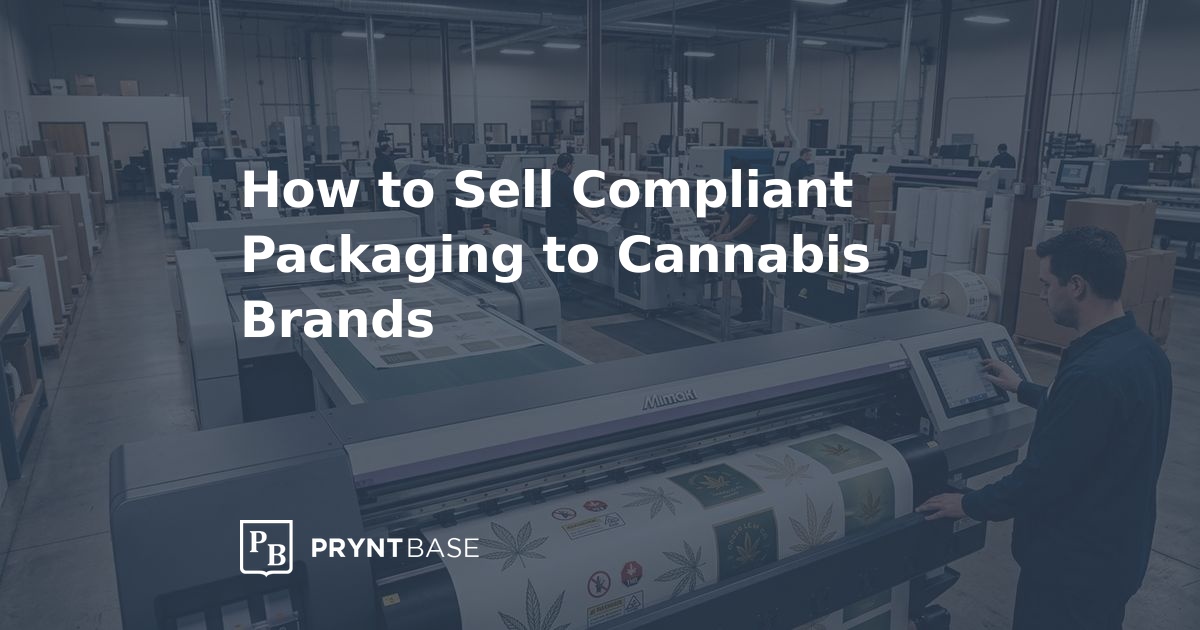
How to Sell Compliant Packaging to Cannabis Brands
The transition from printing business cards and brochures to manufacturing folding cartons for the cannabis industry represents a significant shift for any commercial shop. You are no longer just putting ink on paper. You are producing a highly regulated piece of industrial equipment. Cannabis brands operate under a microscope. Their packaging must protect children, preserve the product, and satisfy a list of state-mandated disclosures that would make a pharmaceutical rep dizzy. For your sales team, this means moving beyond the role of a vendor and becoming a technical consultant. Your estimator needs to know more than just the cost of 100lb cover stock. They need to understand the structural integrity of child-resistant locking mechanisms. Your press operator needs to maintain tight registration to ensure that tiny, legally required warning icons are legible. If you can bridge the gap between compliance and aesthetic appeal, you will secure high-margin accounts that stay loyal because the cost of switching to an unproven printer is too high for them to risk.
Understanding the Three Pillars of Cannabis Compliance
When you walk into a meeting with a cannabis brand manager, the first thing they care about is not your price per thousand. It is whether or not your packaging will get their product pulled from the shelves. Compliance is the foundation of every sale in this sector. You must familiarize your team with three specific areas of concern that affect the print production process.
- Child-Resistant (CR) Certification: Many states require primary packaging to be child-resistant. This often involves specific locking tabs or multi-step opening processes. If you are selling folding cartons, you must ensure your structural design has been tested and certified under ASTM standards.
- Mandatory Labeling Real Estate: Every state has different rules for font sizes and the placement of THC warning symbols. Your prepress department must be vigilant. A missing universal symbol or a font size that is 1pt too small can result in a total recall of the product.
- Tamper-Evident Seals: Whether it is a perforated tear strip or a specific type of adhesive label, the brand needs to prove the product has not been opened since it left the facility.
Compliance is the entry fee, but structural integrity is the long-term retention strategy for your shop. If you can show a prospect that you already understand their state's specific packaging manual, you immediately differentiate yourself from the local shop that is just looking for any quick print job.
Elevating the Brand with Advanced Finishing Techniques
Once the compliance hurdles are cleared, you have to help the brand win the battle for the consumer's eye. The cannabis retail environment is crowded. To sell more print, you need to move the conversation away from standard 18pt SBS and toward premium finishes that create a tactile experience. This is where your shop's high-end capabilities come into play.
- Soft-Touch and Scuff-Resistant Laminates: Cannabis products are handled frequently. A soft-touch coating provides a premium, velvet feel that suggests a higher price point while protecting the ink from fingerprints.
- Spot UV and Embossing: Use these to highlight the brand logo or specific strain names. The contrast between a matte box and a high-gloss spot UV creates a visual pop that is essential for dispensary shelves.
- Cold Foil and Metallic Inks: Many brands want a luxury look without the cost of a custom foil stamp. Incorporating metallic effects into the design can give the packaging a shelf presence that mimics high-end cosmetics.
By suggesting these finishes during the quoting stage, you increase the value of the order and the perceived value of the brand. When your sales reps use SocialMagic to share photos of these high-end press runs on LinkedIn or Instagram, they attract other luxury brands looking for similar quality.
Technical Sales: Speaking the Language of the Cultivator
To win these accounts, your sales approach needs to be as technical as your production process. You aren't just selling a box. You are selling a solution that fits into their automated filling line or their manual assembly process. This requires asking the right questions before the estimator even touches the MIS.
Ask about their secondary packaging needs. Do they need trade show banners for an upcoming industry event? Do they need direct mail pieces to announce a new product launch to their loyalty members? Often, a brand is so focused on the box that they forget about the wider marketing collateral. This is your chance to expand the account. If you have a wide-format department, mention your ability to produce custom floor graphics or window clings for their retail partners. A packaging failure at the retail level can lead to thousands of dollars in fines for your client, making your quality control process their most valuable insurance policy.
Using Data to Find the Right Cannabis Prospects
Finding the right person to talk to in a cannabis company can be difficult. These companies are often guarded and move quickly. You cannot rely on waiting for the phone to ring. You need a proactive approach to build a pipeline of cultivators, processors, and multi-state operators (MSOs).
Using a tool like LeadsMagic can help you identify local businesses that have recently secured licenses or are expanding their operations. Instead of cold calling the general info line, look for the operations manager or the head of marketing. These are the people who feel the pain of a late delivery or a misprinted batch of labels. When you reach out, lead with a specific piece of value. Offer a template for a compliant folding carton or a sample kit that shows off different substrates and finishes. Use EmailMagic to send a personalized follow-up that includes a case study of how you helped another brand navigate a complex compliance update. This builds trust before you even ask for the first quote.
The Importance of Structural Prototyping and Testing
In the world of commercial print, a digital proof is often enough. In cannabis packaging, a physical prototype is non-negotiable. The brand needs to see how the product fits inside the box and how the child-resistant mechanism functions in the real world. This is where your structural designer becomes your best salesperson.
Provide a CAD sample on the actual substrate intended for the run. If the client is using a specific jar or bottle, have them send a sample to your shop. Your designer can then ensure the fit is perfect, preventing the dreaded rattle or the even worse scenario where the product is too tight to be removed easily. This level of service justifies a higher price point. It shows that you are an operator who understands the mechanics of their business, not just a printer looking for a quick hit. When you document this process and share it through BlogMagic, you establish your shop as an authority in the space, making the next sale that much easier.
Selling to the cannabis industry requires a blend of technical expertise, regulatory knowledge, and high-end print capabilities. By focusing on compliance first and aesthetics second, you position your shop as an essential partner to these growing brands. Use the tools at your disposal to find the right leads, showcase your best work, and maintain a rigorous quality control process. The cannabis market is not just a trend. It is a sophisticated sector that rewards printers who can handle the pressure of complex, high-stakes production.