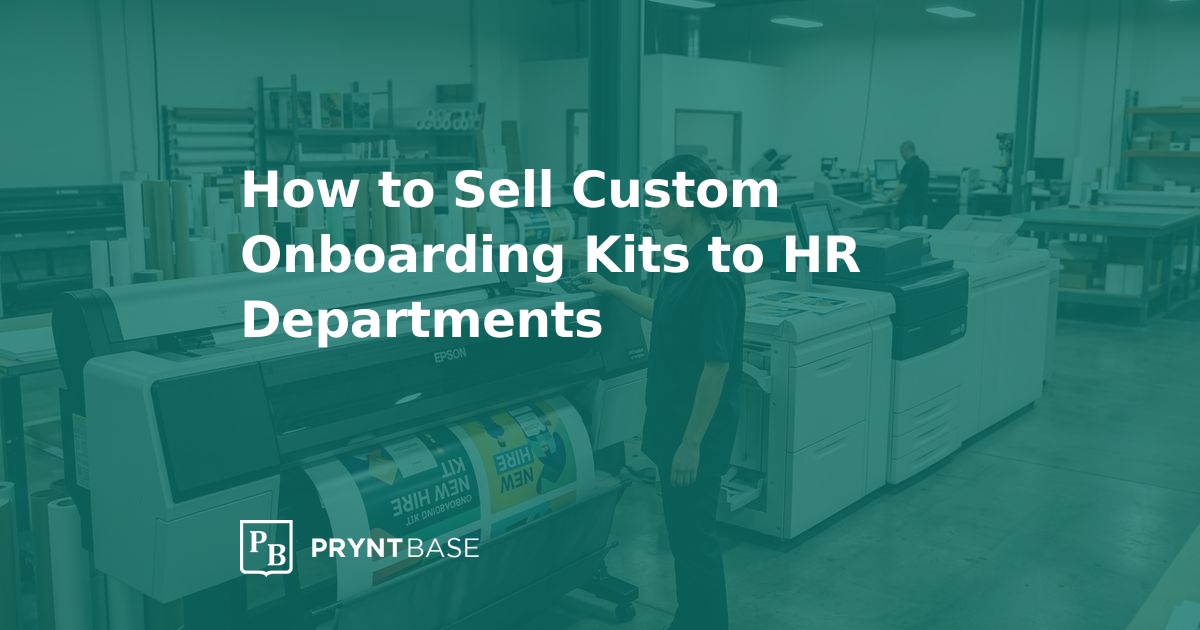
How to Sell Custom Onboarding Kits to HR Departments
The days of surviving solely on high volume business card runs and commodity brochures are fading. If you want to protect your margins and build a moat around your best accounts, you have to move up the value chain. For most commercial print shops, the most logical step is into kitting and fulfillment, specifically targeting Human Resources departments. HR directors are currently struggling with a distributed workforce and the constant churn of recruitment. They are not looking for a printer. They are looking for a logistics partner who can handle the physical manifestation of their corporate culture. When you pitch an onboarding kit, you are not just selling a box with a notebook and a branded pen. You are selling the HR manager three hours of their life back every week. You are selling a seamless experience for a new hire who might be starting their job from a home office three states away from headquarters. This is how you shift from a vendor to a partner.
Understanding the HR Pain Point
Before your sales rep picks up the phone, they need to understand that the HR department operates differently than the marketing department. Marketing wants the highest quality finish and the most vibrant colors for a trade show banner. HR, on the other hand, is focused on retention and efficiency. They are dealing with high turnover rates and the administrative burden of getting gear into the hands of new employees. If an HR manager has to spend their Friday afternoon stuffing folders, taping boxes, and running to the local shipping center, they are failing at their actual job. Your shop can solve this. Your pitch should focus on the cost of their internal labor. Every minute a high-salaried HR director spends doing manual kitting is money wasted for the company. By moving this work to your fulfillment team, you allow them to focus on strategy while you handle the tactile touchpoints. Your MIS should track these projects not just as print jobs, but as recurring service contracts that provide steady, predictable revenue for your shop floor.
Engineering the Perfect Welcome Kit
A successful onboarding kit is a mix of traditional print, promotional products, and functional items. You need to present a menu of options that can be scaled based on the client budget. When you talk to an estimator about these kits, you have to account for the assembly time as much as the materials. A standard kit often includes several distinct components that require different production methods. Consider proposing a package that includes the following items:
- A Custom Mailer Box: This is the first thing the employee sees. Use your wide-format capabilities or a short-run digital press to create branded packaging that stands out on a doorstep.
- The Welcome Letter: Use variable data printing to personalize the message from the CEO. High-quality cardstock with a soft-touch laminate makes a significant impact.
- Functional Print: This includes the employee handbook, a quick-start guide, and a set of reference cards for company values.
- Branded Merch: Partner with a trade supplier for high-quality notebooks, pens, and apparel. If you have in-house embroidery or screen printing, even better.
- Sticker Sheets: A low-cost addition that allows employees to brand their own laptops and water bottles, furthering the reach of the corporate identity.
HR directors do not care about your press speed. They care about the hour of time you save them every Monday morning.
Selling the Fulfillment and Warehousing Service
The real money in kitting is not the markup on the pen. It is the recurring monthly storage fee and the pick-and-pack charges. When you pitch to HR, you are selling a warehouse solution. Explain that you will hold their inventory in your facility and provide them with a digital portal to trigger a shipment whenever a new hire is signed. This is where a tool like StockMagic becomes invaluable. It allows you to give the client real-time visibility into their inventory levels without them having to call your front office. You can set up automated alerts that notify the HR contact when the supply of branded hoodies or printed handbooks is running low. This proactive approach prevents the "emergency" print jobs that disrupt your production schedule and frustrate your press operators. By managing the inventory, you ensure that the client is locked into your ecosystem. It is much harder for a competitor to steal a client when you are currently housing five pallets of their branded materials and managing their entire distribution pipeline.
Pricing for Margin and Sustainability
Many print shop owners make the mistake of pricing kitting like they price a flyer. They focus on the unit cost. For fulfillment work, you must price for the complexity of the labor. You are running a mini-logistics operation. Your pricing structure should be transparent but comprehensive. Break it down into clear categories for the prospect so they understand the value of each stage of the process.
- Production Costs: The standard cost of printing, finishing, and sourcing the physical items.
- Kitting/Assembly Fees: A per-box charge for the physical labor of building the kit. This should account for the time your team spends folding boxes and inserting items.
- Storage Fees: A monthly charge per pallet or per shelf space used in your warehouse.
- Technology Fees: A small monthly fee for access to the ordering portal and inventory management system.
- Shipping and Handling: Pass-through shipping costs plus a small handling fee to cover the administrative work of generating labels and tracking packages.
Your margin lives in the fulfillment and assembly fees, not just the ink on the paper.
Finding the Right HR Prospects
You do not want to pitch this to every small business in town. You are looking for companies with high-volume hiring needs or those that have recently received a round of funding. Tech companies, healthcare systems, and large manufacturing firms are prime targets. Use LeadsMagic to identify companies in your region that are currently posting multiple job openings. This is a clear signal that their HR department is under pressure. When you reach out, your message should not be about your new digital press. It should be about how you help growing companies maintain their culture during rapid expansion. You can even use EmailMagic to craft a sequence of messages that specifically addresses the logistical headaches of remote onboarding. Show them photos of kits you have produced for other clients. Physical samples are your best sales tool in this category. Once they feel the weight of a well-produced box and see the crispness of the branding, the conversation shifts from price to partnership. You are no longer just another printer asking for a quote on business cards. You are a strategic partner helping them build their brand from the inside out.
Selling to HR departments requires a shift in mindset from the traditional print sales model. You are moving away from the one-off project and toward a long-term service relationship. By focusing on the logistical pain points of onboarding and providing a turnkey solution that includes production, kitting, and fulfillment, you can secure high-margin work that keeps your shop busy year-round. Use the technology at your disposal to manage the inventory and the leads, and you will find that the HR department becomes one of your most profitable and loyal customer bases. Start by identifying one current client with a growing headcount and offer to build a prototype kit for them. Once you prove the value of the time saved, the rest of the sales process becomes much easier.